LOVO AI Review
LOVO AI is one of those tools that makes sense the moment you understand its real pitch. It is not just trying to give you synthetic speech. It is trying to give you a complete content workstation built around synthetic speech. That distinction matters because a lot of voice tools still assume the audio file is the final product. LOVO assumes the voice is only one layer in a bigger output that might include subtitles, images, scripts, video edits, and collaboration.
That broader vision makes LOVO easier to recommend to content teams than to purists. If you only care about the absolute best raw voice model, there are competitors that may impress you more in specific scenarios. But if you care about moving from script to finished asset without juggling five separate tools, LOVO becomes much more interesting.
The thing LOVO understands well
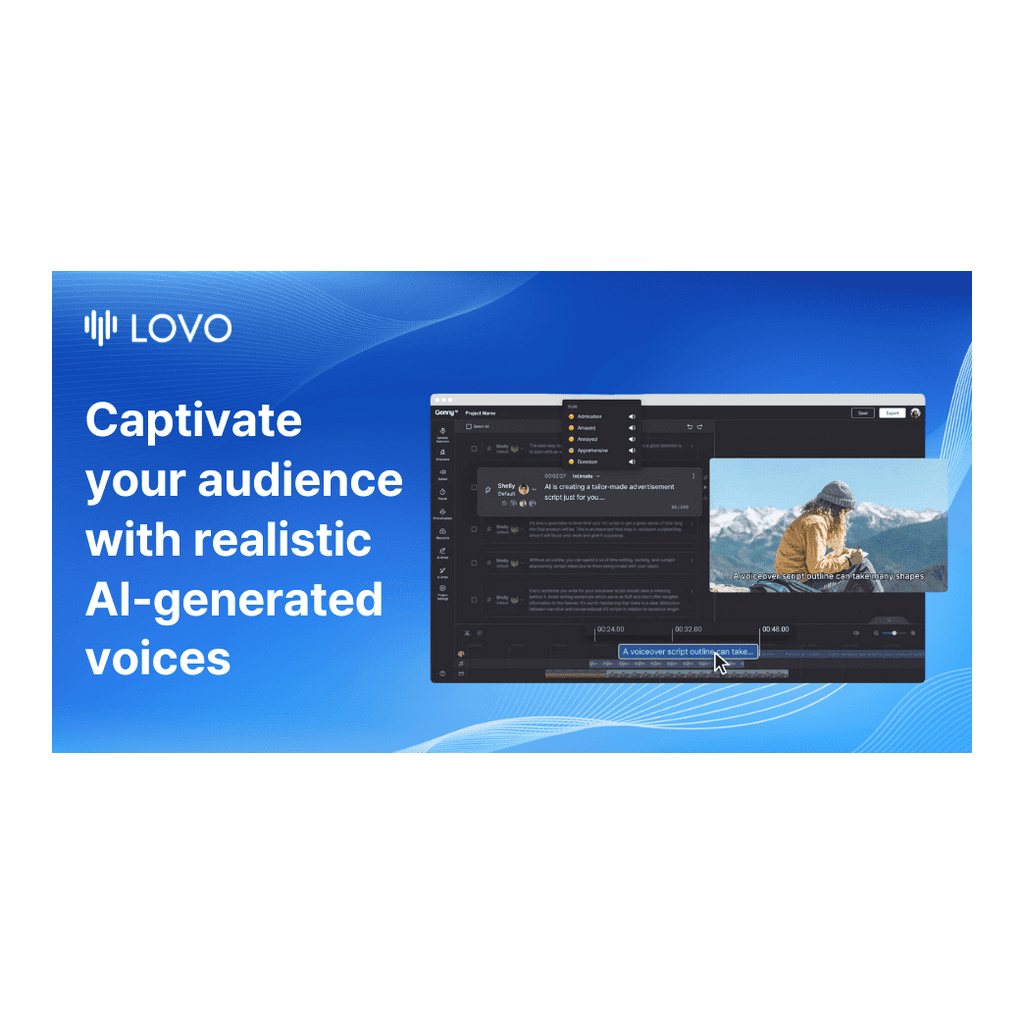
Time gets lost in handoffs. That is where LOVO earns its place. Its Genny workspace combines AI voices, script support, subtitle generation, basic video editing, stock media, image generation, and collaboration into a single environment. That is not revolutionary in concept, but LOVO executes it in a way that feels genuinely practical for teams making explainers, marketing clips, learning content, YouTube videos, and social assets.
The voice library is also large. LOVO advertises more than 500 voices across 100+ languages, which gives it useful breadth for teams serving multiple markets or experimenting with different styles. More importantly, the platform is not only selling variety. It is also selling workflow compression.
Where LOVO shines in day-to-day use
LOVO is strongest when you need to produce a lot of content without building a complicated stack. A marketer can draft a script, generate a voiceover, add subtitles, pull in assets, and export a video without bouncing across multiple tools. That is not always elegant, but it is efficient in the concrete sense of reducing project friction.
I also think the product makes more sense for small teams than some enterprise-first voice platforms do. It is approachable. You do not need to think like an audio engineer or an infrastructure buyer to get value out of it. The platform is clearly trying to meet creators and in-house teams where they already work.
Voice cloning is another major draw. LOVO says users can create custom voices from about a minute of audio, and for brands or repeat creators that can be useful. The caveat, as always, is that cloning features are only valuable when governance and approvals are handled properly.
What feels less impressive
The broad feature set is both the selling point and the risk. Tools that try to do voice, subtitles, scripts, images, and video editing often end up being a little uneven. LOVO is very good at helping content move. It is not the same thing as being best-in-class in every individual module.
That matters if you are an advanced editor or a team with a very specific audio standard. A dedicated video editor will still have more control in a specialist product. A buyer focused purely on high-end voice realism may still compare LOVO against narrower competitors and prefer the one that goes deeper on raw voice quality.
How pricing lands
LOVO’s pricing is easier to read than many AI platforms. The Basic plan is around $24 per user per month billed annually and includes 2 hours of voice generation per month, 500+ voices, five voice clones, 1080p export, and commercial rights. The Pro plan moves up to about $48 per user per month billed annually with 5 hours of generation, unlimited voice cloning, AI creation features, team collaboration, and priority queue access. Pro+ lands around $149 per user per month billed annually with 20 hours of generation and higher storage limits, while enterprise is custom.
That structure is sensible. The basic tier is enough for lighter production, while the pro tiers are clearly aimed at teams treating LOVO as a repeatable content engine.
Who gets the most value out of it
LOVO fits best for:
- marketing teams making explainers, ads, and product clips
- training teams that need narration plus simple visual assembly
- YouTubers and social creators who want voice and editing in one workspace
- small in-house teams that do not want to maintain a fragmented production stack
It is less ideal for buyers who want a minimal, API-first voice engine or those who already have a mature editing stack and only need premium voice generation.
What it gets right (and wrong)
LOVO gets the convenience layer right. It reduces the number of decisions a content team has to make before something usable exists. That alone is valuable. The platform also understands that many buyers are not shopping for “voice” in isolation. They are shopping for finished output.
What it gets less right is depth at the extremes. The bigger the workflow, the harder it is for one tool to dominate every part of it. LOVO is very capable, but the tradeoff for convenience is that some power users will eventually bump into the limits of an all-in-one system.
Final verdict
LOVO AI is one of the better all-around options for teams that need AI voice inside a broader content workflow. It is not just a narrator. It is a production workspace. That makes it more useful than many single-purpose voice generators if your team values speed and consolidation.
If your main priority is streamlining content creation from script to export, LOVO is easy to take seriously. If your only priority is elite voice performance or highly specialized control, you may still prefer a narrower tool.
But for the large middle of the market — teams making marketing, training, social, and explanatory content at volume — LOVO is one of the more practical platforms in the category.
What LOVO is like when deadlines are real
LOVO is easy to appreciate when you are under time pressure. The product is built around the idea that content teams do not want to babysit separate tools for script drafting, voice generation, subtitles, visuals, and basic edits. If a product launch video needs to be revised twice in one afternoon, the all-in-one approach can feel less like a convenience and more like survival.
That is where LOVO quietly beats some purer voice tools. A better standalone voice engine is not always more helpful if it means opening a second app for captions, a third for visuals, and a fourth for assembly. LOVO’s value is not just the voice. It is the reduced friction around everything touching the voice.
Where it starts to strain
The strain shows up when a team expects every module to compete with the category leader. That is usually unfair, but it is also what power users eventually do. Advanced editors will still want more control. Brand-conscious voice teams may want finer voice direction. Larger organizations may want more formal governance around cloning and approvals.
So the right way to buy LOVO is not to expect perfection everywhere. It is to decide whether workflow consolidation is worth more to you than specialist depth. Many teams will answer yes. Some should not.
Who gets the best ROI
The best LOVO buyer is usually a team publishing often enough that every extra handoff hurts. Marketing departments, e-learning teams, YouTube operations, agency producers, and in-house social teams all fit that pattern. The more repeatable the content pipeline, the more LOVO’s packaging starts to pay for itself.
That is also why the Pro tier feels like the real center of gravity. Once a team is using voice cloning, subtitles, generated media, and collaboration together, the platform starts making sense as a workflow subscription rather than just a voice subscription.